 how-to
What Entertainment Works Best for a Small Intimate Wedding?
Last Updated: November 4, 2026
Quick Summary
The best intimate wedding entertainment is interactive, low-tech, and self-contained, such as fairground games, a trivia table, a live acoustic set, or a photo booth that doubles as a conversation starter. Because every gap is visible in a small room, energy must be built rather than assumed, and entertainment must match the venue's size, layout, and noise limits.
- A 20-guest wedding is a different event, not a scaled-down 200-guest wedding.
- For 20 guests, use one long table and add icebreakers to place cards.
- Block a three-hour reception as welcome, eat, connect, celebrate, and send-off.
- Ask the venue for the decibel limit in writing and when it applies.
- Cap speeches at three and put the main event before dessert, not after.
Table of Contents
- Why Intimate Wedding Entertainment Needs a Different Plan
- Unexpected Wedding Entertainment That Fits a Small Room
- Small Wedding Ideas for 20 Guests That Keep Everyone Involved
- Wedding Entertainment for Short Receptions: Making Three Hours Feel Full
- Wedding Entertainment Ideas for Guests Who Won't Dance
- Matching Entertainment to Your Venue Size, Layout, and Noise Limits
- A Sample Reception Timeline and Vendor Logistics Plan
- Building Your Intimate Wedding Entertainment Plan with Love, Happiness & Family LLC
- Frequently Asked Questions
Why Intimate Wedding Entertainment Needs a Different Plan
A 20-guest wedding is not a scaled-down 200-guest wedding. It is a different event with different physics. Wedding entertainment for small intimate venues fails when couples copy the big-reception playbook.
Here is the core problem. A packed dance floor at a 200-person wedding hides everything. Bad timing, weak transitions, a DJ who misreads the room: none of it matters when 80 people are already dancing. In an intimate setting, every gap is visible. Ten seconds of dead air feels like a minute.
So the plan has to change in three ways:
- Fewer people, more pressure per person. Every guest is a participant, not a spectator.
- The room sets the rules. Noise limits, floor space, and layout decide what is possible.
- Energy must be built, not assumed. You cannot wait for the crowd to carry the party.
That is the throughline for everything below. If you want a broader look at how intimate receptions differ from large ones, our team put together a set of unique wedding reception ideas that shows the contrast directly.
Unexpected Wedding Entertainment That Fits a Small Room
The best unexpected wedding entertainment for a small room is interactive, low-tech, and self-contained. Think fairground games, a trivia table, a live acoustic set, or a photo booth that doubles as a conversation starter. These options give guests something to do besides stand and watch.
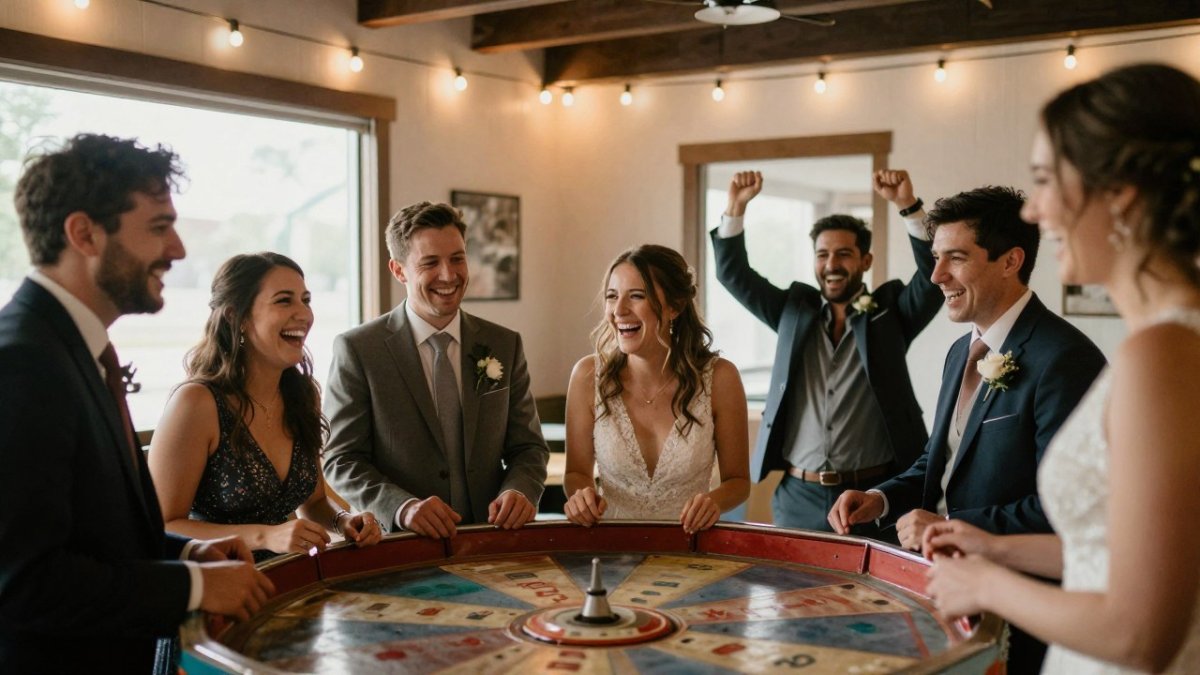
A few options that consistently land well in tight spaces:
- Fairground games. Ring toss, skee-ball, and tabletop carnival games pull people in without a dance floor.
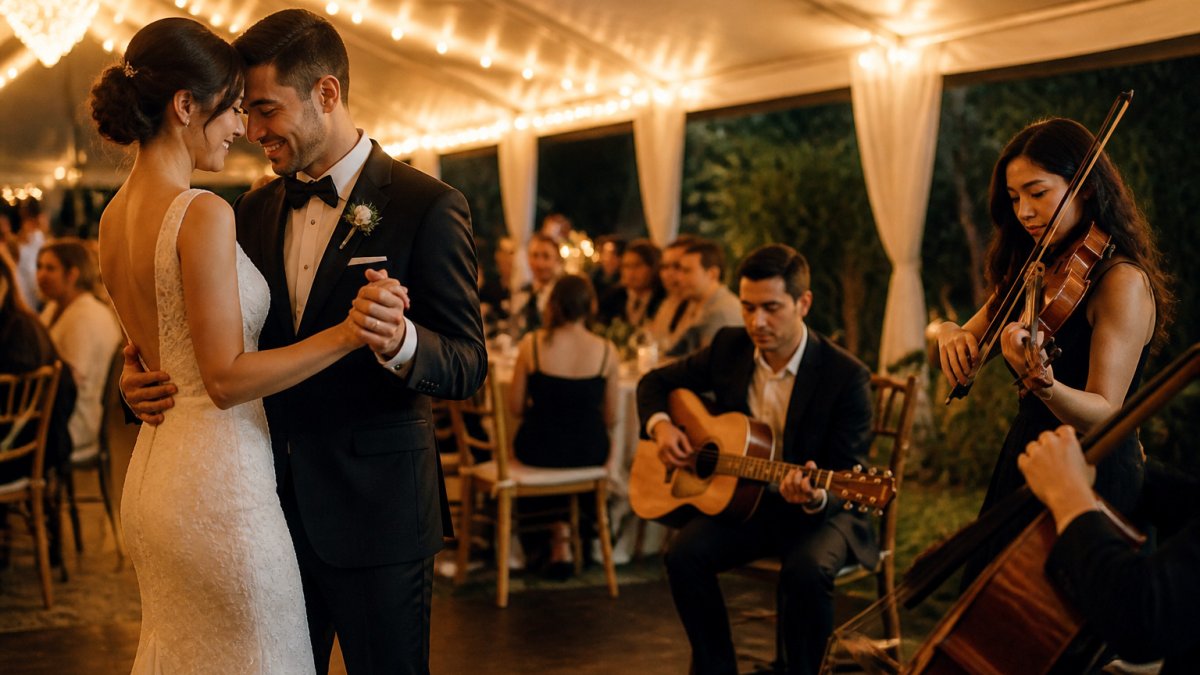
- A tribute band or acoustic duo. Live music at low volume fills the room without overwhelming it.
- Circus performers or a roaming magician. Close-up magic works beautifully at 20 to 40 guests.
- A petting zoo for the cocktail hour. A hit with families, and it keeps kids occupied.
- An escape room style puzzle table. Small-group activities break the ice fast.
If you are weighing a DJ against live music for a compact space, our breakdown of DJ versus band for a wedding reception compares the two on space, volume, and setup.
Small Wedding Ideas for 20 Guests That Keep Everyone Involved
For 20 guests, the goal is participation, not performance. The best small wedding ideas for 20 guests use structured mingling: conversation prompts, shared activities, and a seating plan that mixes friend groups. When everyone knows each other by the end of the night, the entertainment worked.
Practical moves that keep a tiny guest list engaged:
- Use one long table. It creates a single conversation instead of three separate ones.
- Add icebreakers to the place cards. A question per seat gives strangers an opener.
- Plan a group activity between courses. A trivia round or a short comedy sketch breaks the lull.
- Set up a lounge area. A soft seating corner gives quieter guests somewhere to land.
Music matters here too. Our step-by-step guide on how to personalize wedding music playlists walks through building one that fits a small crowd.
Wedding Entertainment for Short Receptions: Making Three Hours Feel Full
A three-hour reception needs a tighter structure than a five-hour one. Wedding entertainment for short receptions works best when every block has a clear purpose: welcome, eat, connect, celebrate, send-off. Skip the loose "open dancing" hour that eats time without building momentum.
A short reception leaves no room for dead time. Here is how we would block it:
- First 30 minutes: welcome drinks and background music.
- Next 60 minutes: dinner with light interaction, speeches, and a toast.
- Next 45 minutes: the main event, whether that is dancing, games, or a performance.
- Final 45 minutes: dessert, a sing-along, and the send-off.
The mistake most couples make is front-loading speeches and back-loading dancing. Flip it. Get people moving earlier, then let the room settle into the final hour.
Wedding Entertainment Ideas for Guests Who Won't Dance
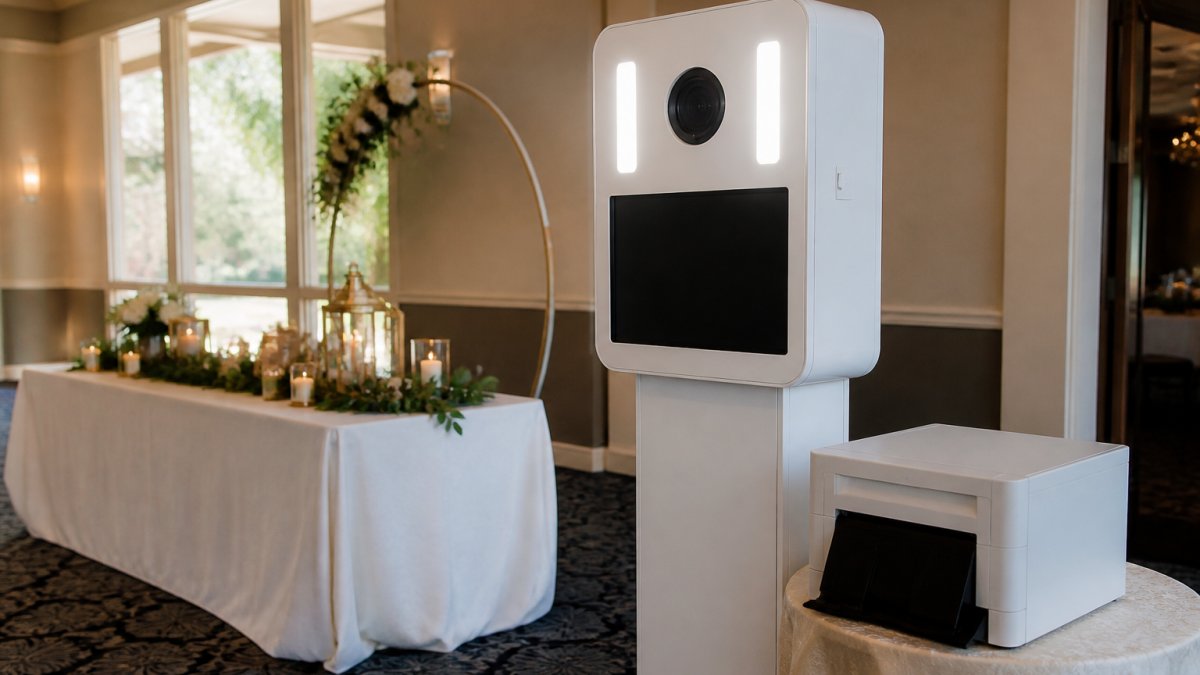
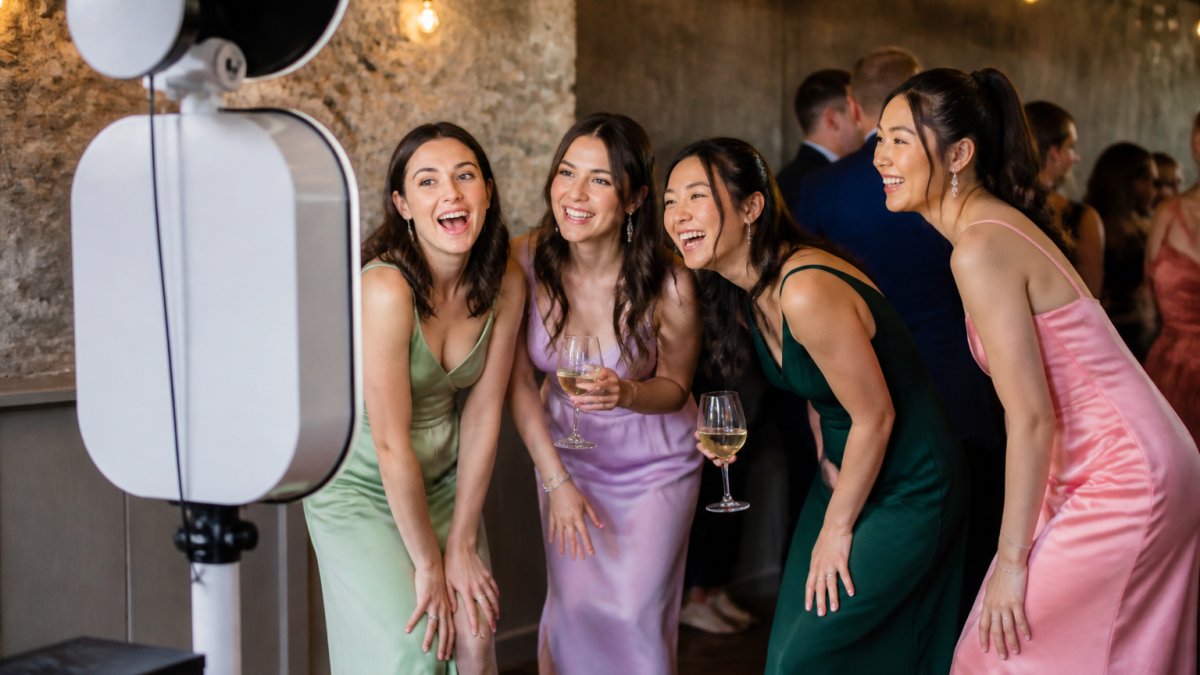
Not every guest dances, and that is fine. Wedding entertainment ideas for guests who do not dance should offer parallel options: a photo booth, a lounge with music at conversation volume, a game station, or a quiet corner with a fire pit. Give people a reason to stay engaged without stepping on the floor.
Watch out: if the only thing happening is dancing, the non-dancers drift toward the exit, and the room thins out fast.
A few low-pressure options that work:
- A 360 photo booth. Guests record short clips and share them instantly.
- A guest book with prompts. "Best advice for the couple" gets people talking.
- A sing-along hour. Familiar songs pull in people who would never dance.
- A dessert or coffee station. A natural gathering point away from the floor.
Accessibility matters too. Keep at least one seated activity at table height, and make sure the lounge is reachable without stairs.
Matching Entertainment to Your Venue Size, Layout, and Noise Limits
Entertainment must match the room, not the other way around. This is where most small-venue plans fail: couples book the act they love, then discover the room will not hold it. The fix is to read the venue first and let the room narrow the shortlist.
Start with the noise cap. Ask the venue for the decibel limit in writing, and ask when it applies. Many venues set a lower cap after a certain hour, and some shared or residential-adjacent spaces enforce it from the first song.
Next, map the floor plan before you shortlist anyone.
Power and load-in are part of the match. Confirm the circuit capacity the venue will give you, whether outlets are shared with caterers, and how far the setup is from the loading door.
Sightlines decide whether guests feel included. In an intimate room, everyone should be able to see the head table, the speeches, and the main activity without standing. Our guide to custom lighting ideas for private parties covers options that transform a plain room without overwhelming a small space.
Outdoor and semi-outdoor spaces add their own rules. Check the local noise ordinance, the venue's cutoff time, and whether the space is shared with other events or neighbors.
Watch out: a venue that quotes a decibel limit verbally but will not put it in writing leaves you exposed if a neighbor complains, so get the number and the enforcement policy documented before you sign a vendor contract.
Finally, match the act to the guest mix, not just the room. A close-up magician works at 20 to 40 guests because everyone is within arm's reach. A trivia host needs a room where one voice can be heard without shouting.
A Sample Reception Timeline and Vendor Logistics Plan
A workable timeline is the difference between a smooth reception and a stressful one. The sample below assumes a three-hour reception with 30 guests. Adjust the blocks to your start time, but keep the order: welcome, eat, connect, celebrate, send-off. The logic is that energy should rise into the middle of the event and settle at the end, rather than front-loading speeches and back-loading dancing.
| Time | Block | What Happens | Who Owns It |
|---|---|---|---|
| 0:00 | Welcome | Guests arrive, drinks, background music | DJ |
| 0:30 | Dinner | Seating, first course, soft music | DJ + caterer |
| 1:15 | Speeches | Toasts, 3 speakers max | DJ cues + planner |
| 1:45 | Main event | Dancing, games, or performance | DJ |
| 2:30 | Dessert | Coffee, cake, sing-along | DJ + caterer |
| 2:50 | Send-off | Last song, exit moment | DJ |
Three rules make that table hold. First, cap speeches at three and give each speaker a time limit; in a small room, a long toast is felt by everyone. Second, put the main event before dessert, not after, because guests leave earlier than you expect at an intimate reception. Third, build in a five-minute buffer between blocks so a late caterer does not cascade into the send-off.
Vendor logistics decide whether the timeline survives contact with the day. Confirm load-in times, power access, and setup space with the venue well in advance, and put the cue sheet in writing. Ask each vendor who owns the cue sheet and who has authority to shift a block if something runs long.
Budget is part of the plan. Pricing depends on the date, the length of the event, and the services chosen. For current prices or a quote, contact LOVE, HAPPINESS & FAMILY LLC through the website. Consolidating music, lighting, and cues with one coordinated provider can reduce the coordination load on the day.
Questions to ask every vendor before booking: What is your setup and teardown time, and does it fit the venue's access window? What is your power draw and do you need a dedicated circuit? What is your footprint in feet? How do you handle a noise cap? Who cues you, and how do you take a cue mid-event? What is your backup plan for equipment failure?
If you are ready to book, our guide to hiring a wedding DJ covers the questions to ask, the contract terms to check, and how to brief a DJ so the night runs on your plan.
Building Your Intimate Wedding Entertainment Plan with Love, Happiness & Family LLC
The challenge with a small wedding is that there is no crowd to hide behind. Every choice shows. Get the plan right, and 20 guests can feel like the best party of the year.
That is where we come in. At LOVE, HAPPINESS & FAMILY LLC, we build entertainment around your room, your guest list, and your vision. Our team brings over 15 years of experience, high-energy DJs who read the room, immersive 360 and traditional photo booths, and party enhancements like CO2 guns, dancing on the clouds, and custom uplighting with monogram projections.
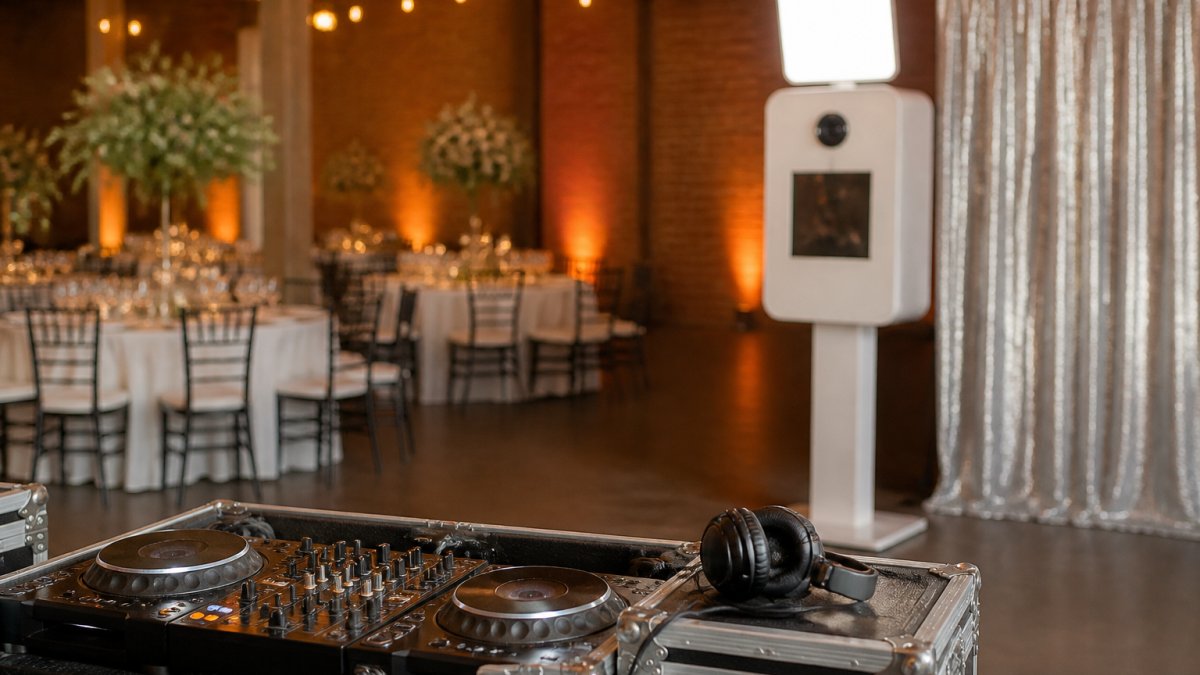
We handle the DJ, the booth, and the lighting as one coordinated plan, so you are not juggling vendors on the day.
Get started with LOVE, HAPPINESS & FAMILY LLC and turn a small guest list into a night nobody forgets.
Frequently Asked Questions
What entertainment works best for a small wedding?
A professional DJ paired with one or two interactive extras usually works best. A DJ can read a small crowd and shift between dinner music, dancing, and announcements without overwhelming the room. Add a photo booth or a single fairground game to give guests something to do during lulls. Avoid anything that requires a large stage or a big audience, since a 40-person room will feel empty during a long performance set.
How do you keep guests entertained at an intimate wedding?
Plan for fewer, better-timed moments rather than a packed schedule. A welcome drink with background music, a short set of speeches, one group activity like a trivia round or a photo booth, and a focused dance block cover a three-hour reception well. Seat guests in mixed groups so conversation carries the quiet stretches, and ask your DJ to keep the volume low enough that people can talk without shouting.
Can a DJ work well at a small wedding?
Yes, and often better than a live band. A DJ takes up far less floor space, adjusts volume instantly when the room gets loud, and can switch genres based on what the crowd responds to. For an intimate wedding, ask the DJ to skip the high-energy hype routine and focus on smooth transitions, requests, and reading the room. Confirm they have experience with crowds under 75 people.
How do you choose entertainment for a small venue?
Start with the room itself. Measure the usable floor space, ask the venue about noise limits and cutoff times, and check whether there is a load-in path for equipment. Then match the act to that footprint: a DJ and photo booth fit almost anywhere, while a live band or performers need clearance and power.