 blog
CO2 Gun Rentals for DFW Events: 2026 Guide
Table of Contents
- Why CO2 Gun Rentals for DFW Events Transform a Party
- CO2 Cannon Safety Guidelines Every Host Should Know
- How to Operate Handheld CO2 Guns at Your Event
- CO2 Cannons vs. Cold Spark Machines: Which Fits Your Event?
- Event Special Effects Rental Pricing and What Drives It
- Booking CO2 Gun Rentals for DFW Events: Venue Compatibility and Logistics
- Frequently Asked Questions
Last Updated: September 30, 2026
Why CO2 Gun Rentals for DFW Events Transform a Party
CO2 gun rentals for DFW events deliver the most reliable jolt of energy you can add to a reception: a timed blast of white vapor that hits the dance floor right when the crowd needs it. At LOVE, HAPPINESS & FAMILY LLC, we've spent over 15 years watching what pulls guests out of their chairs.
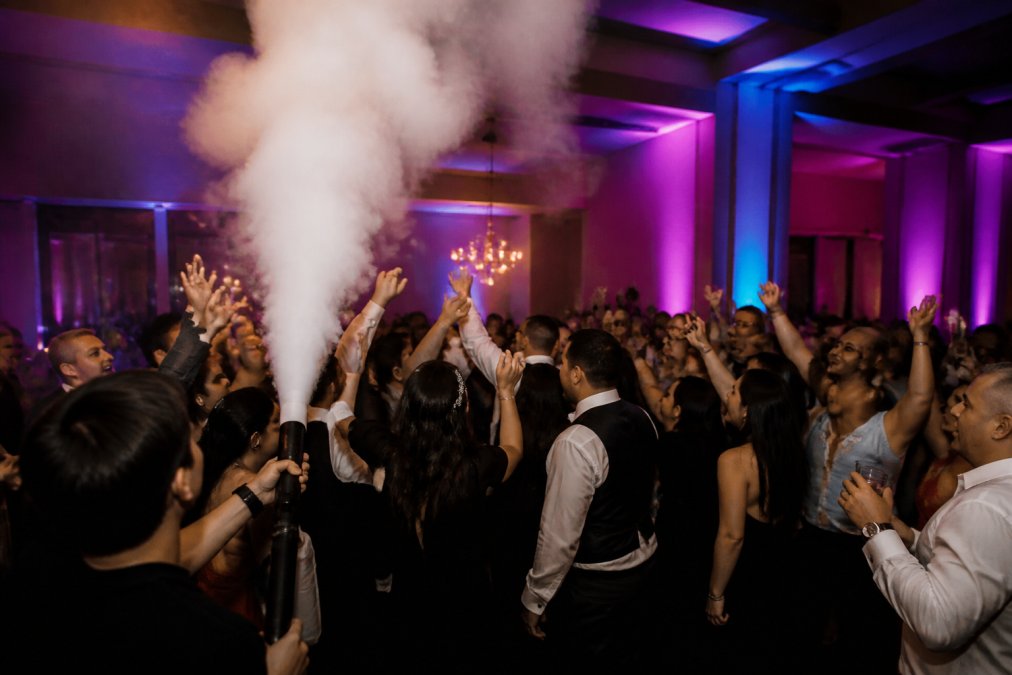
What a CO2 Cannon Actually Does on the Dance Floor
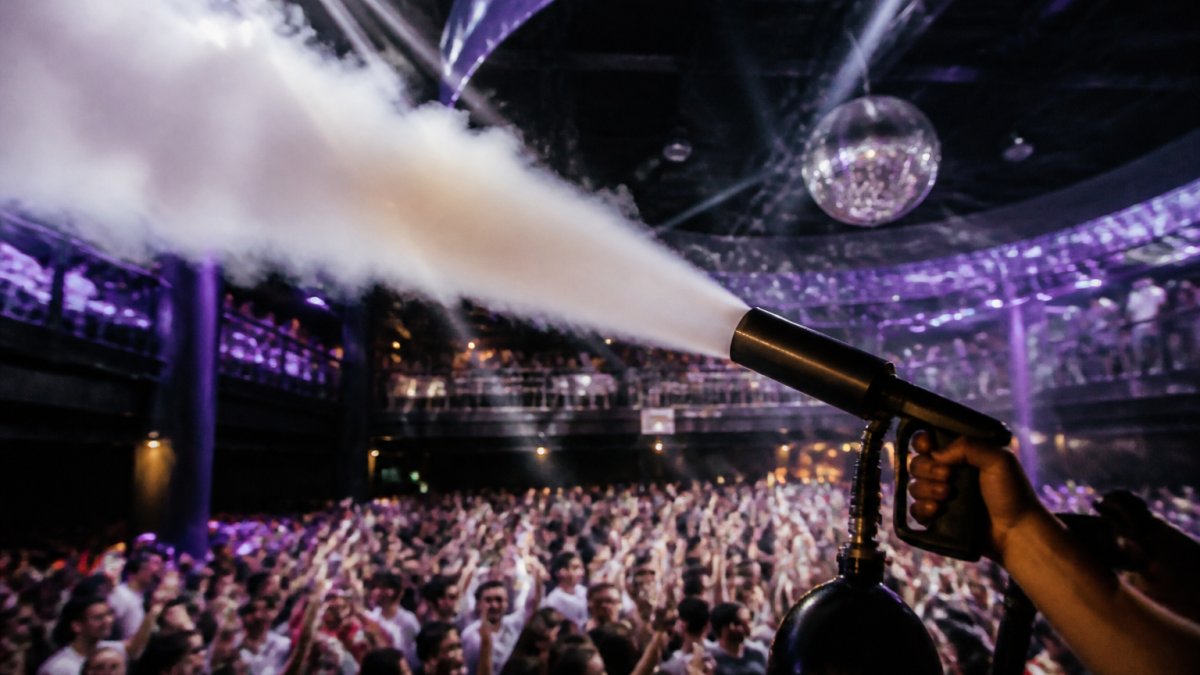
A CO2 cannon shoots a dense, low-hanging cloud that spreads across the floor rather than rising like smoke. That's why it pairs so well with dance floor effects and professional lighting: the fog catches color and makes beams visible.
Three moments where the effect earns its keep:
- The first dance finale, when you want a visual exclamation point
- The grand entrance, especially for quinceañera and milestone birthday celebrations
- Peak-hour dance sets, when the crowd is already moving and needs a push
CO2 Cannon Safety Guidelines Every Host Should Know
CO2 cannon safety guidelines come down to three things: ventilation, clearance, and trained operation. Handled correctly, a CO2 cannon is a controlled effect with a long track record at weddings and corporate events. Handled casually, it's a frostbite and asphyxiation risk.
Venue Clearance, Ceiling Height, and Indoor Use
Most venues allow CO2 effects but require advance written approval. Ask your venue coordinator two questions before booking: does the venue permit special effects, and is there a ceiling height minimum?
Liability Insurance and Permit Questions for Special Effects
Many venues now require proof of liability insurance from any vendor operating special effects on site, and some municipalities require a permit for pyrotechnic-adjacent effects.
How to Operate Handheld CO2 Guns at Your Event
Operating a handheld CO2 gun is a repeatable sequence, not a party trick. Here is the walkthrough we use to train operators, written so a host can ask sharper questions of any provider.
The Setup Sequence, Step by Step
A handheld CO2 gun is a simple machine: a pressurized tank, a high-pressure hose, a trigger valve, and a nozzle. The order of assembly matters more than the parts.
- Inspect before you connect. Check the hose for cracks, fraying, or a crimped end, and confirm the tank valve turns freely. A damaged hose is the number-one cause of a dangerous leak.
- Secure the tank upright. A CO2 tank should stand vertical and be strapped or chained so it cannot tip. A falling tank can shear the valve and turn into a projectile.
- Connect the hose to the tank, hand-tight, then wrench-snug. Over-tightening crushes the washer and creates a slow leak you will not notice until the plume goes weak.
- Connect the hose to the gun and check the trigger. The trigger should return crisply with no stick. If it feels mushy, stop and swap the unit.
- Open the tank valve slowly and listen. A faint hiss at the connection means a leak. Close the valve, reseat the fitting, and try again. Never tape over a leak.
- Test-fire away from people, low and across an empty floor. One short burst confirms pressure and aim before guests are anywhere near it.
What a Good Burst Looks Like
A well-run cannon produces a dense, low cloud that rolls across the floor and dissipates in seconds. If you see any of the following, something is off:
- A thin, sputtering plume almost always means a loose hose connection or a partially open tank valve.
- A short burst that fades fast usually means the tank is chilling down. CO2 output drops as the tank gets cold during rapid repeated use, so operators pace bursts and let the tank recover.
- A plume that shoots high instead of low is an aim problem, not a pressure problem. Angle the nozzle down and across the floor.
- A trigger that sticks open is a service issue. Stop using the unit and swap it out; do not try to free it mid-event.
Troubleshooting Without Killing the Moment
During an event, the goal is a fast, quiet fix. Keep a spare hose, gun, and second tank staged out of guest sight; if a unit fails, swap it rather than repairing it on the dance floor. Common mid-event problems and fixes:
- Weak plume: check the tank valve is fully open, then check the hose connection.
- No plume at all: confirm the tank is not empty and the trigger is engaging the valve.
- Frost on the hose or fittings: normal during heavy use, but if frost climbs onto the gun body, pause and let it warm.
- Leak at the tank: close the valve, reseat the fitting, and if it still leaks, retire that tank.
What to Ask Before You Book
You don't have to run the equipment yourself, but you should vet whoever does. Four questions separate a professional operator from someone who rented a tank:
- How many bursts does one tank deliver, and what is your refill plan?
- Do you carry a spare gun and hose to every event?
- Who trains your operators, and how often?
- What is your protocol if a unit fails during the first dance?
CO2 Cannons vs. Cold Spark Machines: Which Fits Your Event?
CO2 cannons and cold spark machines both create dramatic effects but solve different problems. Choose CO2 for a low, spreading fog that hugs the dance floor; choose cold spark machines for vertical fountains of sparks that read as a grand entrance moment.
| Feature | CO2 Cannon | Cold Spark Machine |
|---|---|---|
| Visual effect | Low white fog plume | Vertical spark fountain |
| Best for | Dance floor energy | Grand entrances, cake cutting |
| Indoor use | Often allowed with clearance | Frequently restricted indoors |
| Power needed | No power required | Requires a power source |
| Reset time | Near-instant between bursts | Needs cooling between uses |
Event Special Effects Rental Pricing and What Drives It
What moves the number:
- Unit count: more cannons mean a bigger visual footprint and more tanks
- Rental duration: a full-day event costs more than a two-hour window
- Operator inclusion: trained operation and insurance coverage add value and cost
- Delivery and setup: distance and venue access affect logistics
- Custom packages: bundling with DJ, lighting, or photo booth often lowers the total
For current rates and a quote tailored to your date and venue, contact LOVE, HAPPINESS & FAMILY LLC directly.
Booking CO2 Gun Rentals for DFW Events: Venue Compatibility and Logistics
Booking CO2 gun rentals for DFW events works best when you start with the venue, not the equipment. The biggest reason a CO2 effect gets shut down on event day is that nobody confirmed the venue's rules in advance. Here are the venue types you'll encounter across the area, what each tends to require, and the logistics that keep the night running.
Venue Compatibility by Space Type
Venue rules for CO2 effects cluster by building type. Here's the pattern we see most often:
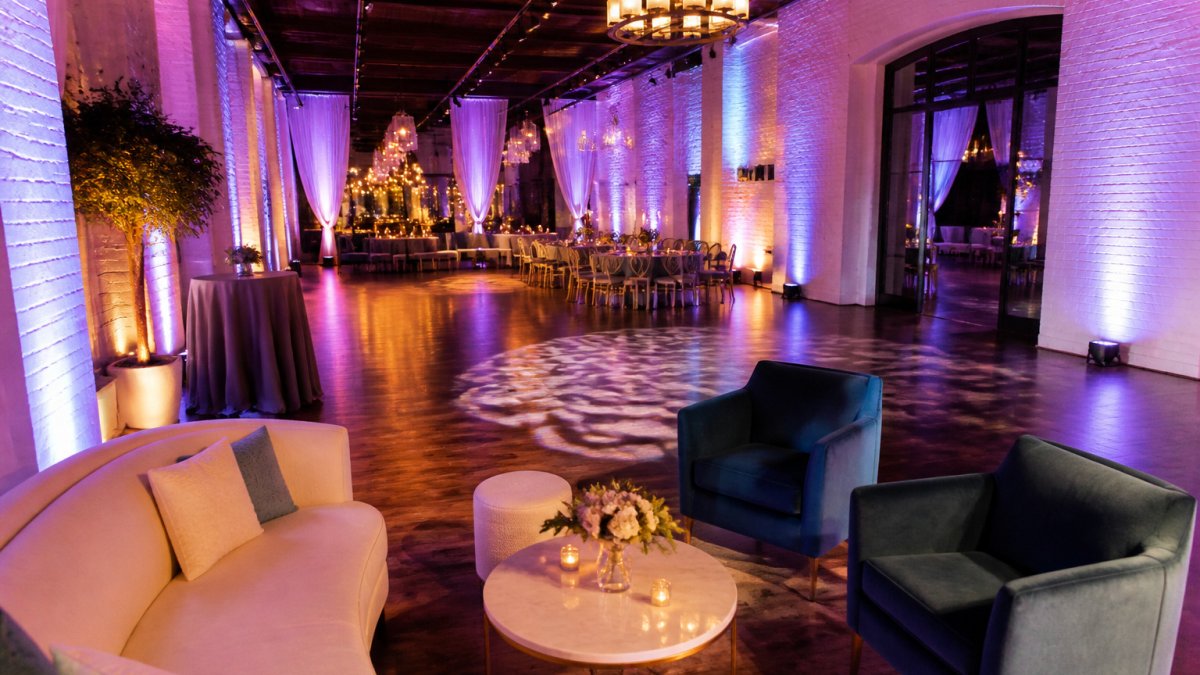
- Historic downtown event spaces and lofts. These are the tightest. Low ceilings, exposed beams, and older fire-suppression systems mean many require written approval and a ceiling-height minimum before they will allow any special effect. Some prohibit CO2 entirely and steer clients toward cold spark or haze instead.
- Hotel ballrooms. Generally the most permissive for CO2 because they are built for stage production, with high ceilings and existing rigging. Most still require a certificate of insurance from the vendor and advance notice to the venue coordinator.
- Banquet halls and country-club clubhouses. Rules vary widely by management company. Some have a standing special-effects policy; others decide case by case. Always ask for the policy in writing.
- Outdoor venues, patios, and tented spaces. Rarely a ceiling problem, but wind is the real constraint. A plume that rolls beautifully indoors can scatter instantly outdoors, so operators adjust aim and burst timing to the conditions.
- School gymnasiums and community centers. Often the most restrictive because of district risk policies. Expect to need a COI and a named operator, and expect some to say no outright.
The Two Questions That Decide Everything
Before you book anything, ask the venue coordinator two questions:
- Does the venue permit CO2 or special effects, and is there a written policy?
- Is there a ceiling-height minimum or clearance requirement?
Logistics That Separate a Smooth Event From a Stressful One
Once the venue says yes, operational details decide whether the night runs clean:
- Confirm venue clearance in writing before you pay a deposit.
- Share your floor plan so the operator knows where the dance floor, the head table, and the guest seating will be.
- Ask about backup equipment in case a unit fails mid-event.
- Check the insurance requirement and request a certificate of insurance naming the venue if needed.
- Lock your timeline so bursts land on the right songs, not randomly.
- Confirm load-in access and timing. Downtown spaces with freight elevators or limited parking docks need the operator to know the route before the day of.
Why Local Experience Beats a Lower Rate
Venue compatibility varies block to block, from historic downtown spaces with low ceilings to large ballrooms built for stage production. A provider who has worked your venue before knows its quirks: which door to load through, where the power is, how the coordinator likes to be communicated with, and whether the ceiling will take a full burst. That local knowledge is worth more than a slightly lower rate from an out-of-area vendor reading the venue's rules for the first time on your event day.
Frequently Asked Questions
How much does it cost to rent a CO2 gun for an event?
Pricing depends on the number of cannons, tank refills, delivery distance, and event date. Weekend weddings and holiday parties often carry higher rates than weekday corporate events. Because tank quantity and rental duration vary so much from one booking to the next, most providers quote per event rather than posting a flat rate. Ask for a written quote that lists the cannon, tanks, operator, and delivery separately so you can compare apples to apples before you book.
Are CO2 cannons safe for indoor use at weddings?
Yes, when the venue allows them and the operator follows CO2 cannon safety guidelines. The effects use food-grade CO2, which is the same gas used in beverage systems, so it is not toxic in a ventilated room. The real risks are cold burns from direct contact with the nozzle and slip hazards from condensation on the floor. Check ceiling height, confirm the venue permits fog effects, and keep guests a safe distance from the plume.
Do I need a special permit for CO2 special effects?
Most private events do not require a separate permit for handheld CO2 cannons, but rules vary by city, venue, and fire code. Some venues require a certificate of insurance naming them as an additional insured, and a few restrict fog or cryo effects entirely because of smoke detectors. Confirm requirements with your venue coordinator and your rental provider before the event date, and get any insurance documentation in writing ahead of time.
What is the difference between a CO2 gun and a confetti cannon?
A CO2 gun releases a burst of cold fog or vapor that disappears within seconds and leaves nothing behind. A confetti cannon launches paper or metallic pieces that scatter across the floor and require cleanup. CO2 effects work well for repeated moments throughout the night, like a first dance or grand entrance, because there is no mess. Confetti cannons deliver one big visual hit, usually at a finale, but they need a cleanup plan and some venues ban them outright.